
Magnesium for Sleep: What Actually Works
A practical, evidence-aware guide to glycinate, citrate, L-threonate, timing, dosage, safety, and whether magnesium is even the right fix.
Magnesium gets marketed like a simple sleep fix. Take the right form, time it before bed, and supposedly you will sleep deeper, recover faster, and wake up sharper.
The evidence is not that clean.
Magnesium is essential for normal physiology, and correcting low magnesium intake matters. But for otherwise healthy adults, the average sleep benefit from supplementation appears modest. The form you choose, your baseline intake, your tolerance, and the actual reason you are sleeping poorly all matter more than the hype.
For founders, that is the useful way to think about it.
Magnesium may be worth testing. It should not become another optimization project.
The Short Answer
If you want the practical version first:
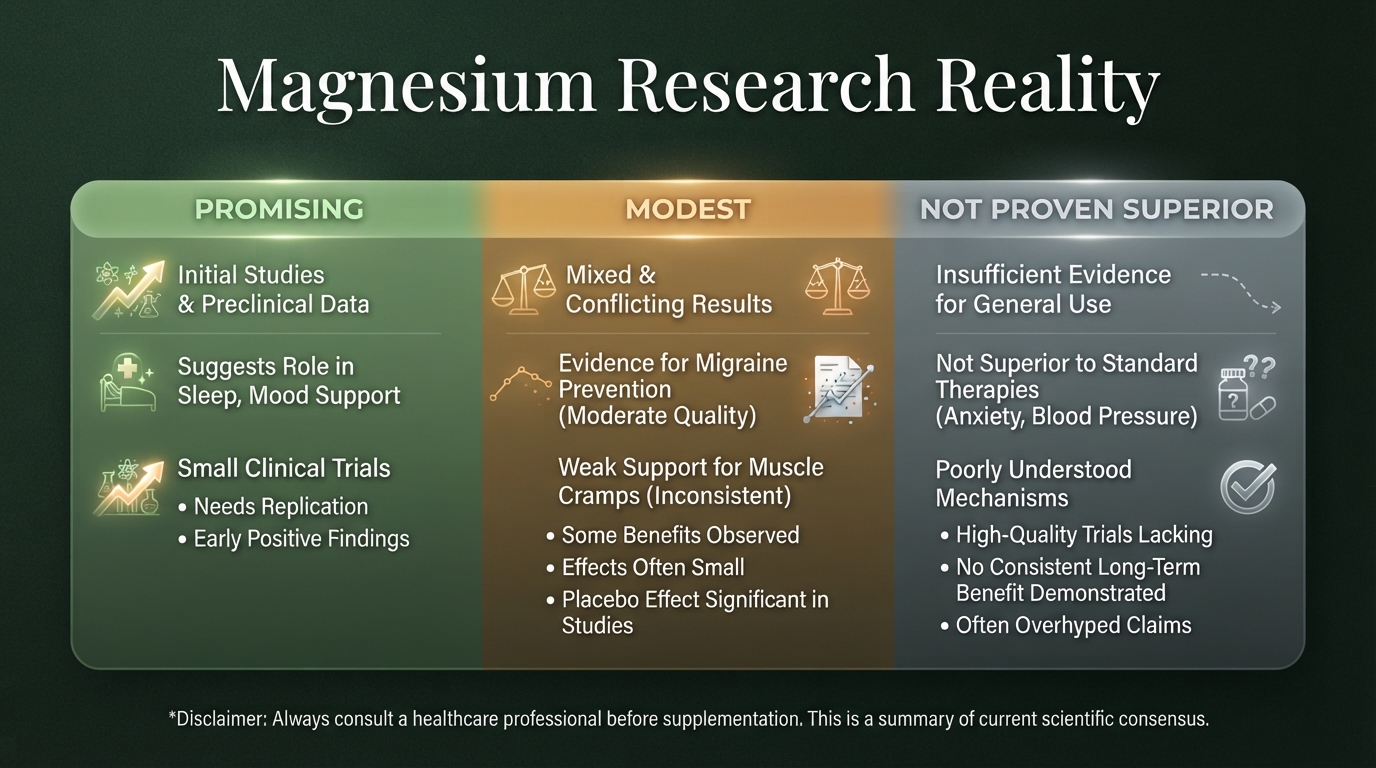
The best available bisglycinate trial found a statistically significant improvement in insomnia symptoms, but the net benefit over placebo was only about 1.6 points on a 28-point scale. The average effect was real but small.
That is a good summary of magnesium for sleep overall: possible benefit, not a breakthrough.
What the Human Research Actually Shows
The strongest mistake in the original draft was treating magnesium as if the sleep benefit were already well established. It is not.
The older sleep literature is small and inconsistent. A review of three small trials in older adults suggested that magnesium might shorten sleep-onset latency, but the evidence quality was judged low to very low, and total sleep time did not improve reliably.
More recent studies are more useful because they test specific forms.
Magnesium Bisglycinate
- Study: 2025 randomized, double-blind, placebo-controlled trial, 155 adults with self-reported poor sleep.
- Dose: 250 mg of elemental magnesium as bisglycinate for four weeks.
- What improved: Insomnia Severity Index improved more than placebo.
- What did not: Net difference was only 1.6 points (small effect size). No clear improvements in daytime fatigue, mood, sleepiness, or anxiety.
- Why it matters: Makes bisglycinate reasonable, but not miraculous.
Magnesium L-Threonate
- Study: 2024 trial showed some favorable subjective outcomes and selected wearable-derived metrics.
- What did not: Did not establish broad improvements in total sleep time, sleep efficiency, or insomnia severity.
- 2026 trial: Found no between-group improvement in any Oura Ring sleep outcome.
- Why it matters: L-threonate may be interesting for experimentation, but it has not been shown to outperform glycinate, citrate, or cheaper forms for sleep.
The strongest current evidence points to modest benefits, not dramatic sleep transformation.
Who Is Most Likely to Benefit?
Magnesium probably makes the most sense when one of these applies:
- Your dietary magnesium intake is low
- A clinician has identified magnesium deficiency
- You want to test a low-friction supplement while keeping expectations modest
- You also have a reason to choose a particular form, such as constipation with citrate
In the bisglycinate trial, people with lower baseline dietary magnesium intake appeared to respond better in exploratory analysis. That matters.
If the real problem is late work, alcohol, caffeine, apnea, pain, or schedule chaos, magnesium is probably not the first fix.
Magnesium Forms, Compared
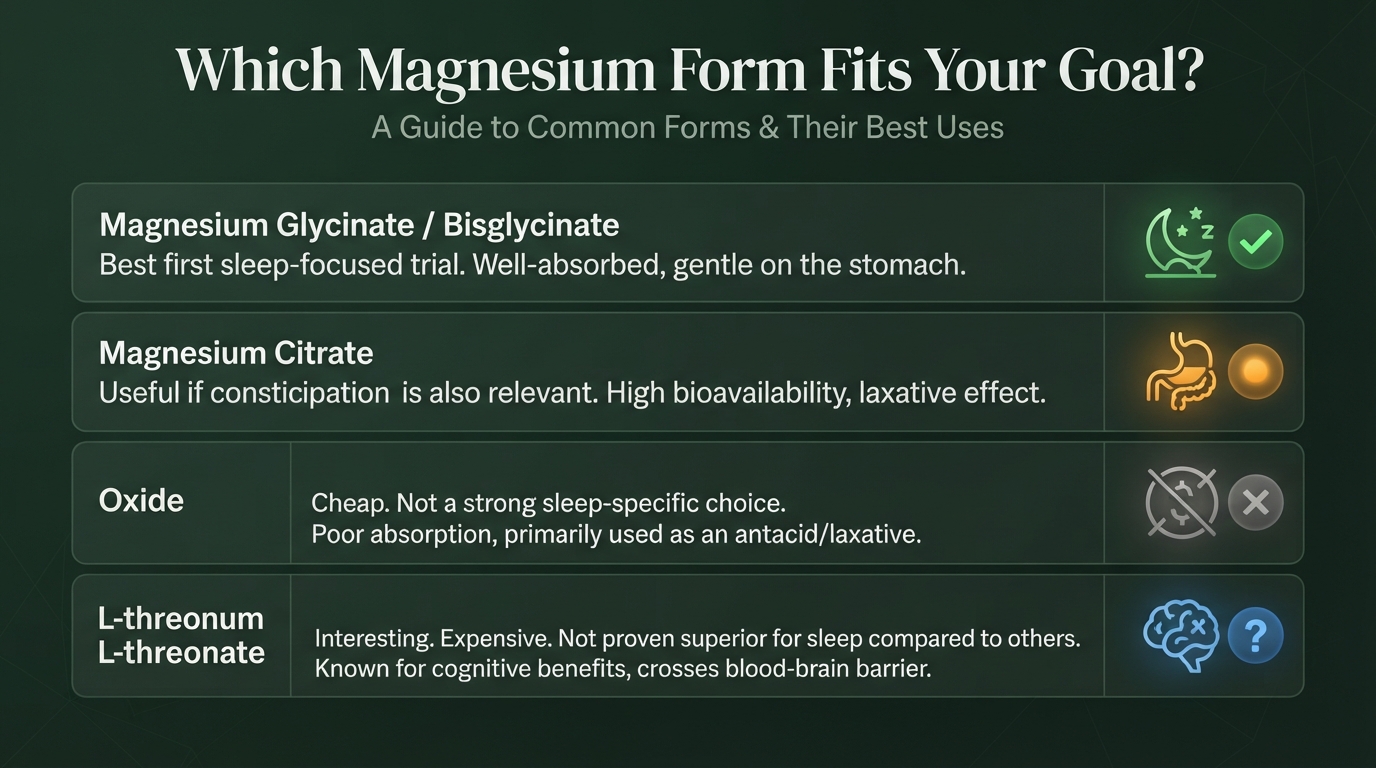
Magnesium Glycinate / Bisglycinate
Best First TrialBest For
The most reasonable first form to try if sleep is the goal and GI tolerance matters.
Why It Makes Sense
Generally well tolerated, lower risk of loose stools than citrate or oxide, and now has a direct placebo-controlled sleep trial. Usually much less expensive than L-threonate.
Main Tradeoff
The 2025 study used magnesium bound to glycine, so it is difficult to separate the magnesium effect from the possible contribution of glycine itself. That is worth knowing before treating glycinate as uniquely proven.
Magnesium Citrate
Dual-PurposeBest For
People who want magnesium and also want digestive support.
Why It Makes Sense
Its biggest advantage is that it can also help with constipation, making it a practical dual-purpose form if that is relevant.
Main Tradeoff
Citrate can cause loose stools, cramping, or GI urgency in some people. That makes it less appealing as a bedtime supplement if digestive disruption is already a problem.
Magnesium Oxide
Not a Sleep PickBest For
Cheapest laxative-type or antacid use.
Why It Makes Sense
Cheap and widely available, commonly used in low-cost supplements and laxative-type products.
Main Tradeoff
Absorption is less favorable than several other forms and it is more likely to produce GI side effects at substantial doses. Not my first choice for sleep.
Magnesium L-Threonate
Interesting, Not ProvenBest For
Someone who understands the uncertainty, is comfortable paying more, and is interested in experimenting with cognition or subjective recovery.
Why It Makes Sense
Promising but preliminary evidence through 2026. Gets the most biohacker attention and is marketed as premium brain magnesium.
Main Tradeoff
Newer studies are small, industry-funded, and have not produced consistent objective sleep improvements. Has not been shown to outperform glycinate, citrate, or cheaper forms for sleep.
Interesting is not the same as proven better.
Which Form Should You Actually Choose?
| Goal | Best Practical Choice | Why |
|---|---|---|
| Sleep trial with less GI friction | Glycinate / Bisglycinate | Well tolerated, direct sleep-trial evidence |
| Magnesium plus constipation support | Citrate | Dual-purpose, digestive support |
| Cheapest laxative-type use | Oxide | Inexpensive, but not a sleep pick |
| Cognition-oriented experiment | L-Threonate | Promising but not proven superior |
That is the useful decision framework. Do not choose a magnesium product just because the label says "high absorption," "brain magnesium," or "sleep optimized." Absorption evidence and sleep-outcome evidence are not the same thing.
How Much Magnesium Do You Need?
Men
400–420
mg/day total intake
Women
310–320
mg/day total intake
Supplemental UL
350
mg/day from supplements
Those numbers refer to total intake from food and supplements combined. For supplements specifically, the NIH tolerable upper intake level for adults is 350 mg per day from supplements and medications.
The supplemental upper limit does not include magnesium naturally found in food.
That distinction matters because many supplement labels contain large numbers that are easy to misread. For example, "2,000 mg magnesium L-threonate" does not mean 2,000 mg of elemental magnesium.
Always look for the amount of elemental magnesium.
When Should You Take Magnesium?
Evening use is practical because it fits naturally into a sleep routine. Some studies have used dosing roughly 30–60 minutes before bedtime, but I would not treat that window as a magic rule.
The more useful priorities are:
- Take it consistently
- Choose a form you tolerate
- Avoid using a dose that creates GI problems
- Do not expect precise timing to compensate for poor sleep habits
If taking magnesium at dinner works better for your routine and your stomach, that may be more sustainable than forcing a perfect pre-bed schedule.
Do not turn supplement timing into another system to manage.
Food First: High-Magnesium Foods for Busy Founders
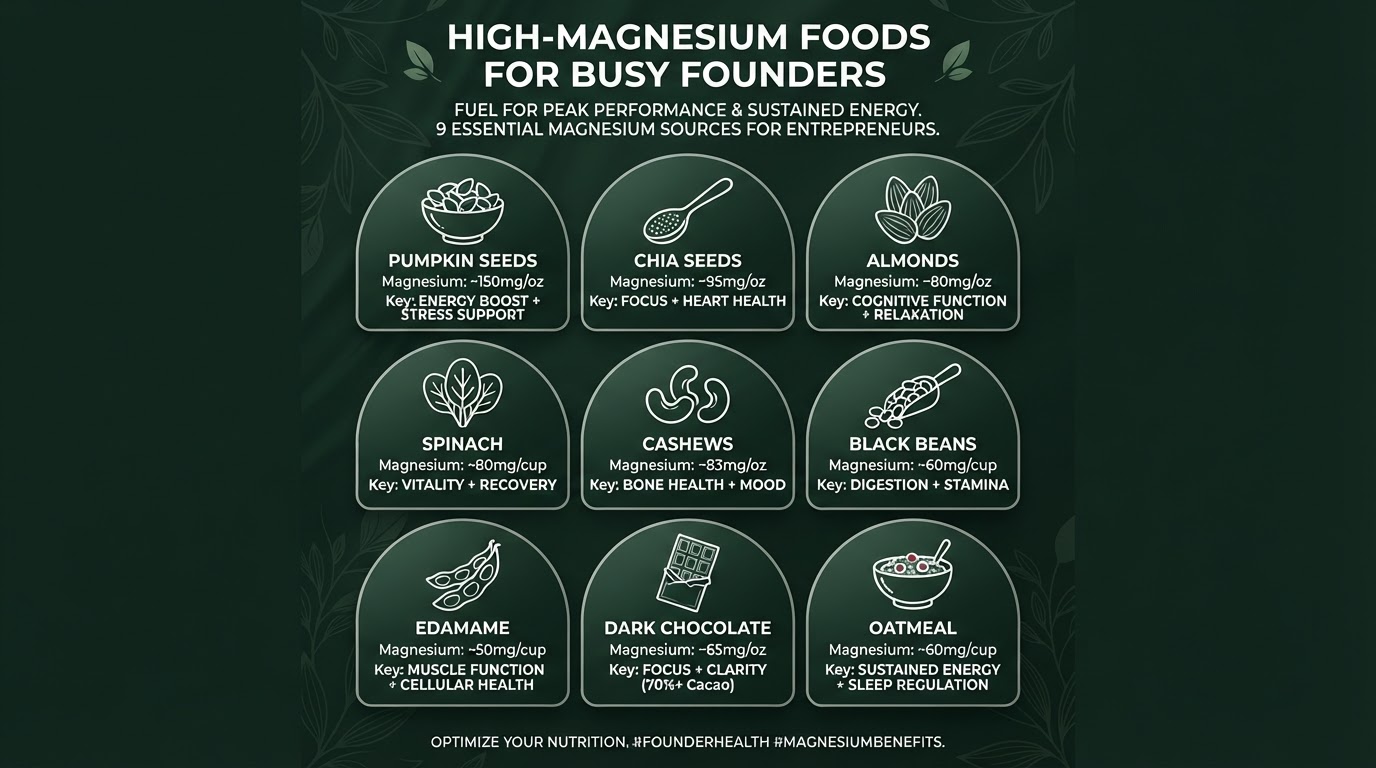
Before turning magnesium into another supplement decision, check your food intake. Some of the best practical sources are:
Pumpkin seeds
~156 mg/oz
Chia seeds
~111 mg/oz
Almonds
~80 mg/oz
Cooked spinach
~78 mg/½ cup
Cashews
~74 mg/oz
Black beans
~60 mg/½ cup
Edamame
~50 mg/½ cup
Dark chocolate
~50–64 mg/oz
Instant oatmeal
~36 mg/packet
Fish is nutritious, but it is not a major magnesium source compared with seeds, nuts, beans, and greens.
Founder-Friendly Ways to Use This
- 5-minute oats upgrade: Plain oatmeal + chia + almonds can provide a substantial amount of magnesium without becoming a full meal-prep project.
- Desk snack: Pumpkin seeds or almonds are easy to portion and keep nearby. See our best healthy snacks for entrepreneurs for more options.
- Fast lunch bowl: Black beans + edamame + spinach gives you magnesium plus fiber and protein.
That is more useful than trying to solve a basic nutrition gap with an expensive "sleep stack."
Before You Supplement
Magnesium is generally well tolerated, but dose, kidney function, and medication interactions still matter.
Potential Side Effects
- Diarrhea
- Nausea
- Loose stools
- Abdominal cramping
Risk increases with higher doses and certain formulations.
People with reduced kidney function are at higher risk of magnesium toxicity because the kidneys are responsible for clearing excess magnesium.
Magnesium can also interfere with certain medications, including:
- Tetracycline and fluoroquinolone antibiotics
- Oral bisphosphonates
- Some diuretics
- Long-term proton-pump inhibitor therapy can also affect magnesium status
If you take prescription medication or have kidney disease, talk with a clinician or pharmacist before supplementing.
When Magnesium Is Probably Not the Real Sleep Problem
This is the part most supplement articles skip. If your sleep is poor because you:
- Work until midnight
- Drink caffeine late
- Use alcohol to wind down
- Travel constantly
- Have untreated sleep apnea
- Have chronic pain
- Have restless legs
- Have an inconsistent sleep schedule
- Lie in bed mentally rehearsing tomorrow's problems
Then magnesium may not be the highest-return intervention. If any of those sound familiar, start with how entrepreneurs can sleep better, check founder burnout symptoms, or explore the Sleep Hub and Stress Hub for the actual leverage points.
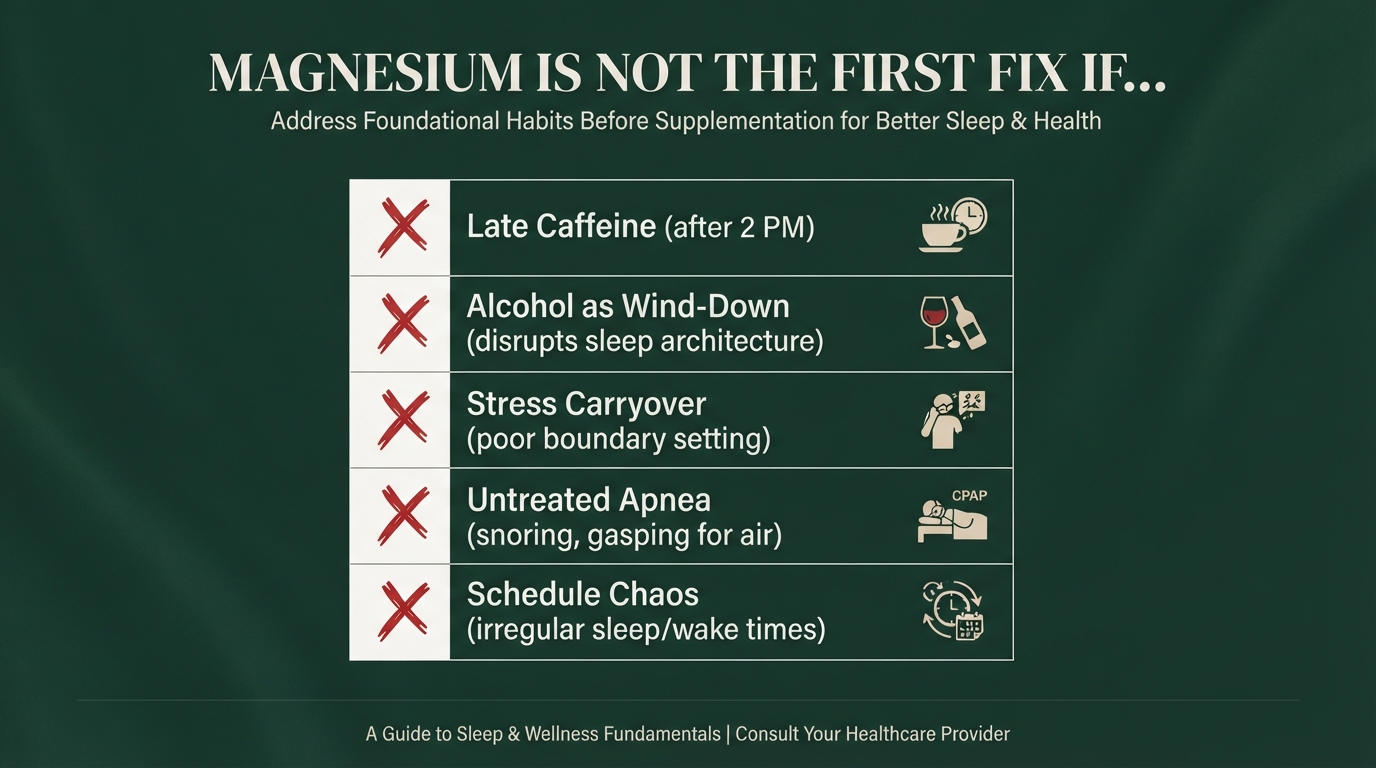
A supplement can correct a gap. It cannot fix a broken sleep system.
The Founder Takeaway
Magnesium is worth considering if you keep the expectations realistic. If you want the simplest decision rule:
- Start with food
- If you supplement, glycinate or bisglycinate is the most reasonable sleep-focused first choice
- Choose citrate if constipation is also relevant
- Do not pay a premium for L-threonate because you assume it is proven better for sleep
- Do not let tracking, dosing, or supplement timing become another system to manage
The Green Hustler standard: use the lowest-friction intervention that solves a real problem.
Magnesium may help. It should not become the problem.
FAQ
Want to improve sleep beyond supplements?
Magnesium is one small lever. If your sleep system is the real problem, the highest-return moves are usually structural, not supplemental.
Note: This article is for educational purposes and is not medical advice. If you have kidney disease, take prescription medications, or experience persistent sleep problems, talk to a qualified healthcare professional. Read our full Medical Disclaimer.